Regulate to Educate

Every behaviour tells a story

Before we can educate, we must first regulate.

Scroll, meet the child every teacher knows ↓

Where it begins

Once upon a time…

Once upon a time, there was a baby. They arrived in the world exactly the same as every other baby. Curious. Hopeful. Full of possibility.

Before long they learnt to smile. To walk. To laugh. To ask a thousand questions. Like every other child, they couldn't wait to start school. Because school is where dreams begin… or at least, that's what we hope.

But this little one experienced school differently. They couldn't quite follow what the teacher was saying. Instructions seemed to disappear before they reached their brain. They worked twice as hard as everyone else but somehow always seemed to fall behind.

The other children noticed. So did the adults. And before long, this little one realised something. Being funny was easier than admitting they didn't understand. Being disruptive was safer than putting their hand up. Getting sent out of class hurt less than everyone discovering they felt stupid.

So they became “the naughty one.” “The lazy one.” “The class clown.” “The difficult one.” “The child who never listens.”

Year after year, that label followed them. Not because they were bad. But because somewhere along the way they stopped believing they belonged.

By the time they reached secondary school, they weren't avoiding maths. They were avoiding failure. They weren't refusing lessons. They were protecting themselves from another day of feeling different. Eventually people stopped talking about their potential. They started talking about their behaviour.

But here's the heartbreaking part. Nobody wakes up in the morning wanting to fail. No child dreams of being excluded. No child wants to spend their school years believing they are the problem.

Behaviour is often communication. Sometimes it's fear. Sometimes it's anxiety. Sometimes it's trauma. Sometimes it's ADHD. Sometimes it's autism. Sometimes it's simply years of believing, “I'm not clever enough.”

Now imagine if, somewhere along that journey, one adult had noticed. One adult had paused before judging. One adult had asked, “I wonder what's happened here?” instead of, “What's wrong with you?” One adult who looked beyond the behaviour and saw the child.

Because sometimes that's all it takes. One person. One conversation. One moment of belief. To completely change the direction of a life. I've seen it happen. Not once. Not twice. Hundreds of times.

That's why I created Regulate to Educate™. Because every child deserves more than an education. They deserve to leave school believing in themselves.

And I honestly believe that when we change the way adults see children, we change the way children see themselves. And that's where real education begins.
Why schools work with Nina

Behaviour isn't misbehaviour. It's communication. When staff learn to read it, everything downstream changes.

Understand behaviour

See the need beneath the behaviour, using neuroscience staff can use on a Monday morning.

Regulate emotions

Calm nervous systems learn. Give children, and adults, practical ways back to steady.

Empower staff

Confident teachers, fewer exclusions, less burnout. The whole team pulling the same way.

Transform outcomes

Better relationships, better attendance, better results, for the children who need it most.

The framework

The R.E.G.U.L.A.T.E. Method

Eight steps that carry a school from the moment behaviour arrives to the moment learning can begin.

R
Recognise

Notice the signal early. Behaviour is the first thing we see, not the whole story, but the way in.

E
Explore

Get curious before we get corrective. What happened before, around and beneath this moment?

G
Gather evidence

Look at the patterns, not the one bad day. When, where and with whom, the data that tells the truth.

U
Understand the need

Every behaviour is meeting a need. Name it, and the response almost writes itself.

L
Lower stress

Bring the nervous system back to safety. A dysregulated child cannot learn, and neither can a dysregulated adult.

A
Adapt the environment

Change the conditions, not just the child. Small shifts in the room remove the trigger before it fires.

T
Teach regulation

Regulation is a skill, not a demand. Build it deliberately, so the child can find their own way back to calm.

E
Evaluate progress

Measure what changed. Review, refine and evidence the impact, for the child, the staff and the school.

What changes

25
years supporting schools and the children in them
1000s
of teachers and support staff trained across her career
100s
of children supported to reconnect with learning
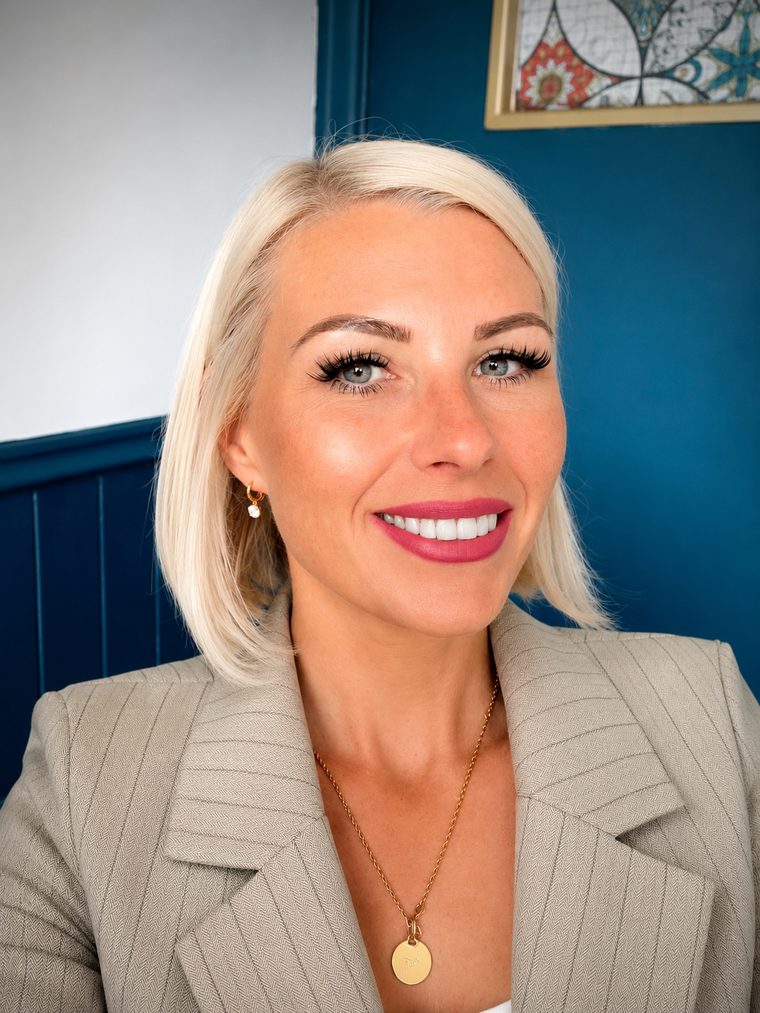
Nina Thorne

Meet Nina Thorne

The teacher who kept asking why

“For over 25 years I've learned that the hardest children are the ones carrying the most.”

Across two and a half decades of classrooms, SEND rooms and staffrooms, one thing kept proving itself: when we regulate first, everything else becomes possible. Behaviour softens. Relationships rebuild. Children start learning again.

The R.E.G.U.L.A.T.E. Method™ is everything Nina wishes she'd been handed on day one, grounded in neuroscience, held together by compassion, and built for a real school with a real budget and a very real Tuesday.

Nina's story

Real stories. Real children. Real change.

The proof isn't in the theory. It's in the children Nina has taught, believed in, and never forgotten.

Permanently excluded from three schools, found sitting under a desk with a towel over his head. Today he's a qualified plumber who runs his own business.

Student J Read the story

“What is someone like you doing here with us?” A question from a girl in a pupil referral unit who went on to become the leader of her group.

The PRU Read the story

“It was you. You were the teacher who told me I was special.” A young girl who now owns her own salon.

The salon chair Read the story
Read the full stories

Let's talk about the child on your mind

Book a free discovery call. Tell Nina about your school, your staff and the behaviour you're navigating, and she'll show you how the method can help.

Book a discovery call